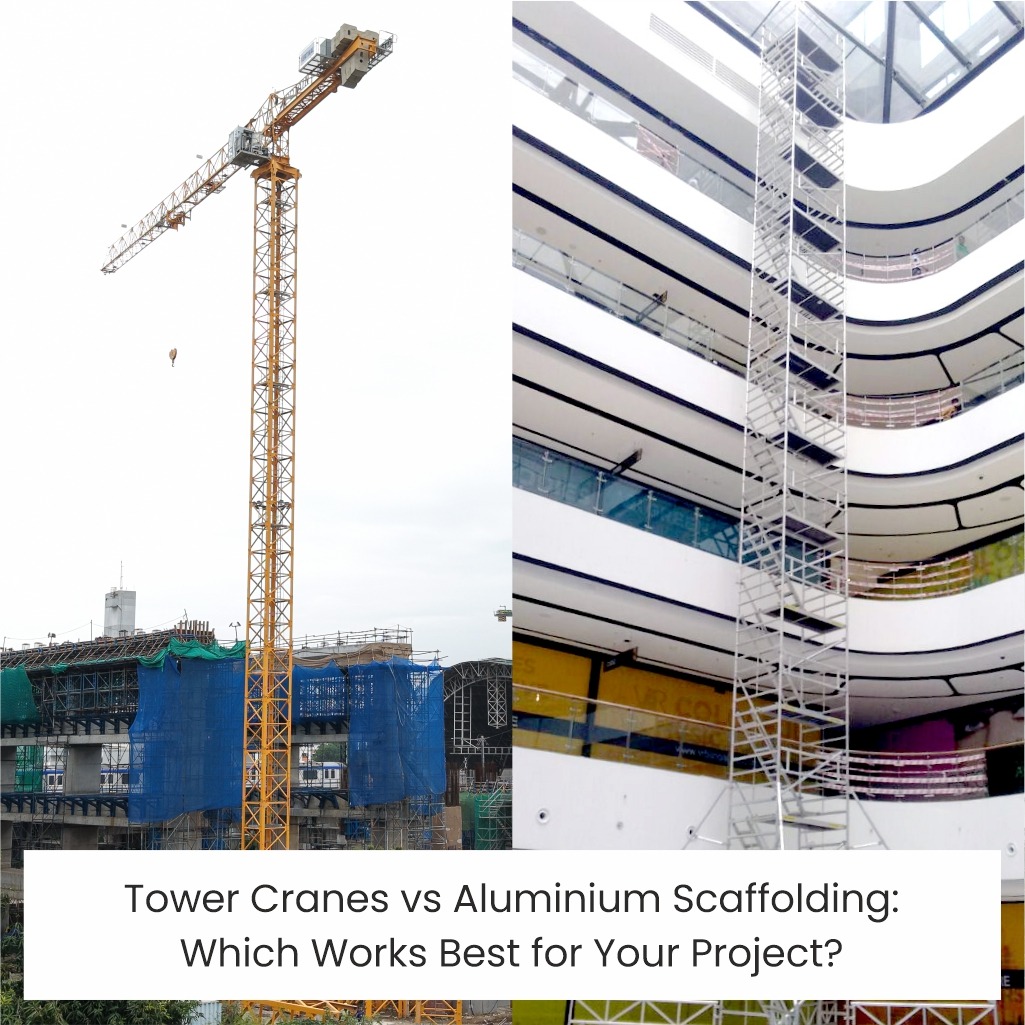
Tower Cranes vs Aluminium Scaffolding: A Practical Guide for Contractors
When planning a mid-rise or high-rise construction project, one of the biggest questions teams faces is whether to rely on tower cranes or aluminium scaffolding for their lifting and access needs. Both options serve completely different purposes but often get compared by contractors who want the safest, fastest and most cost-efficient method for their site.
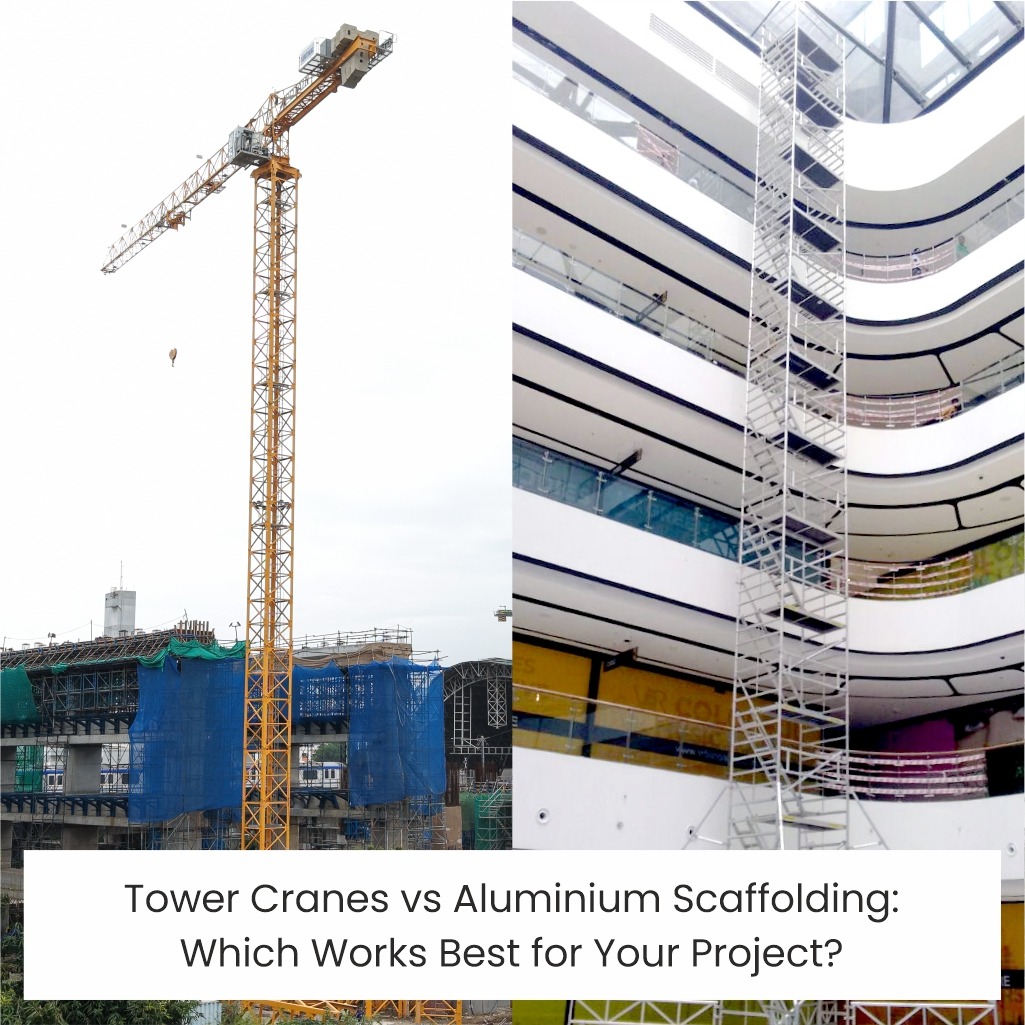
In this, we break down how tower cranes and scaffolding differ, where each one performs best, and how to pick the right option based on your project goals.
What Tower Cranes Deliver That Scaffolding Cannot
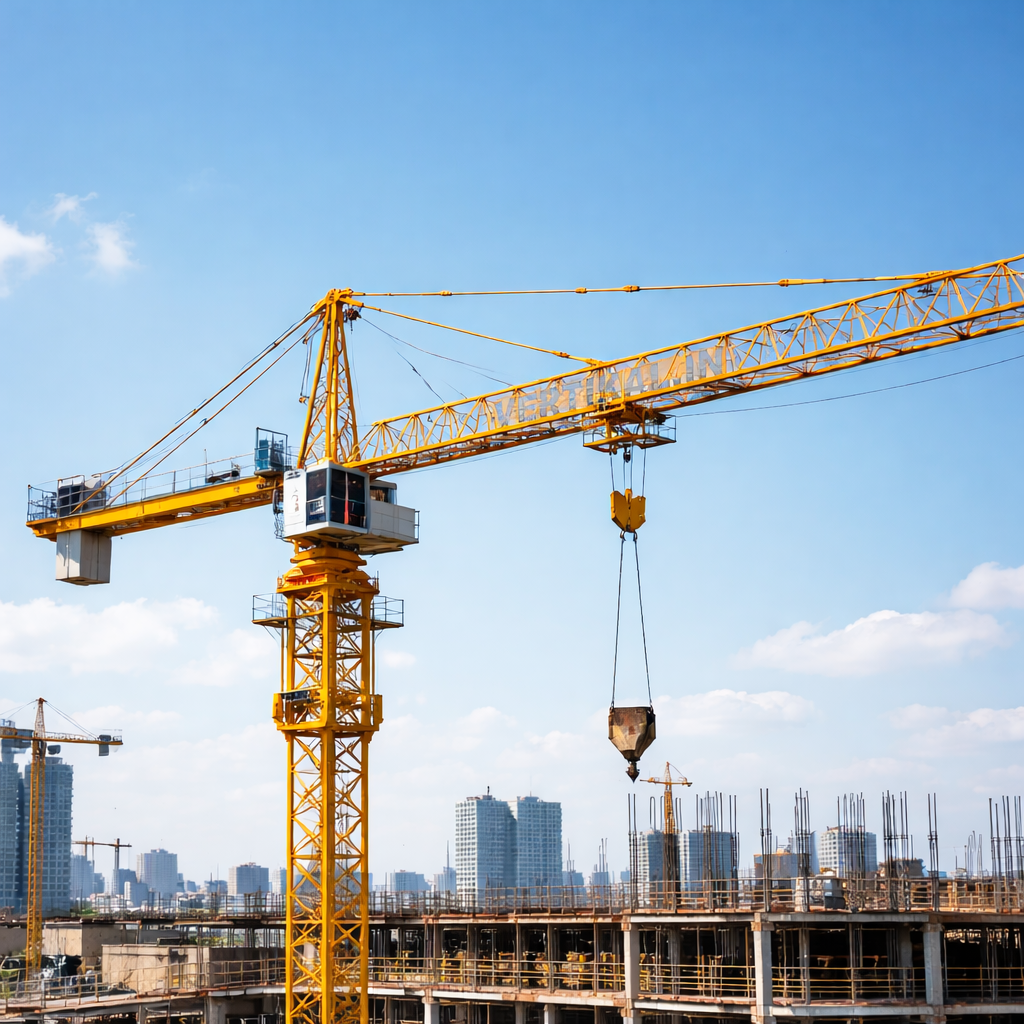
Tower cranes are the backbone of modern high-rise construction. With the ability to lift heavy loads to great heights, they eliminate the limitations of manual handling and offer unmatched reach and stability. They are ideal for:
- High-rise RCC structures
- Large commercial buildings
- Infrastructure projects like metros and airports
- Heavy material lifting and multi-floor distribution
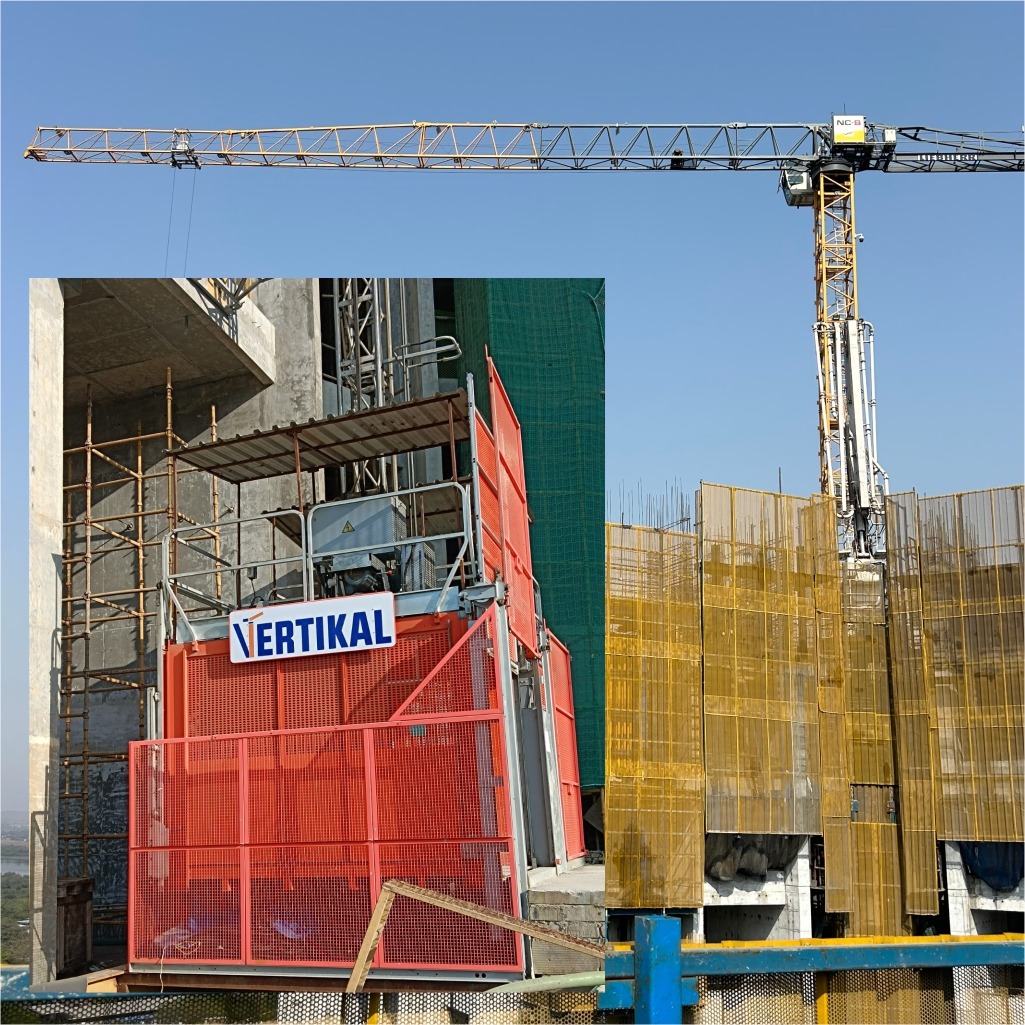
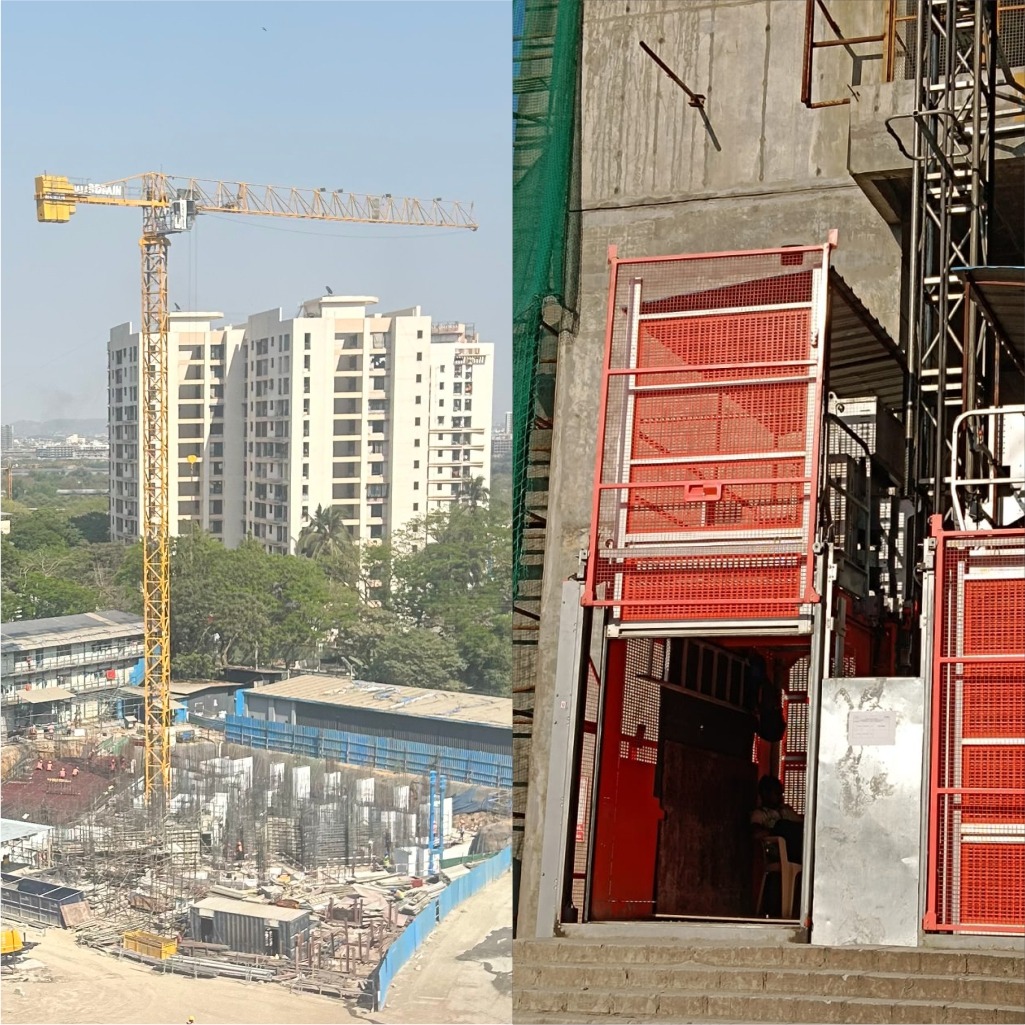
If your project demands precision lifting, constant material movement, or vertical access above 30–40 meters, a tower crane becomes essential. You can explore Vertikal’s tower crane portfolio here:
https://vertikal.in/e-brochure/
Where Aluminium Scaffolding Works Better
Aluminium scaffolding has its own advantages, especially for maintenance, interiors, light construction and repair work. It is lightweight, mobile and easy to install within minutes. For tasks like façade cleaning, indoor MEP work, false ceiling installation or warehouse maintenance, scaffolding is more flexible and budget-friendly.
- To understand aluminium tower options, visit:
https://aqaccess.com/aluminium-scaffolding/
https://aqaccess.com/
Scaffolding is best when workers require stable standing platforms at medium heights and do not need heavy lifting capability.
Tower Cranes vs Scaffolding — How to Decide?
Here’s a quick comparison to help you choose:
| Criteria | Tower Cranes | Aluminium Scaffolding |
| Purpose | Heavy lifting & vertical material handling | Worker access & small tool handling |
| Best For | High-rise projects, long-term sites | Maintenance, small builds, indoor jobs |
| Height Capability | Extremely high | Limited |
| Setup Time | Longer, requires planning | Quick, 10–20 minutes assembly |
| Cost Impact | Higher upfront cost, high productivity | Low cost for small-scale tasks |
If your project involves large-scale construction with continuous lifting requirements, a tower crane is the clear winner. For work-at-height tasks inside buildings or for short-duration maintenance, scaffolding is more practical.
Why Choosing the Right Access System Matters
Selecting the correct system affects:
- Total project cost
- Work timelines
- Site safety compliance
- Labour productivity
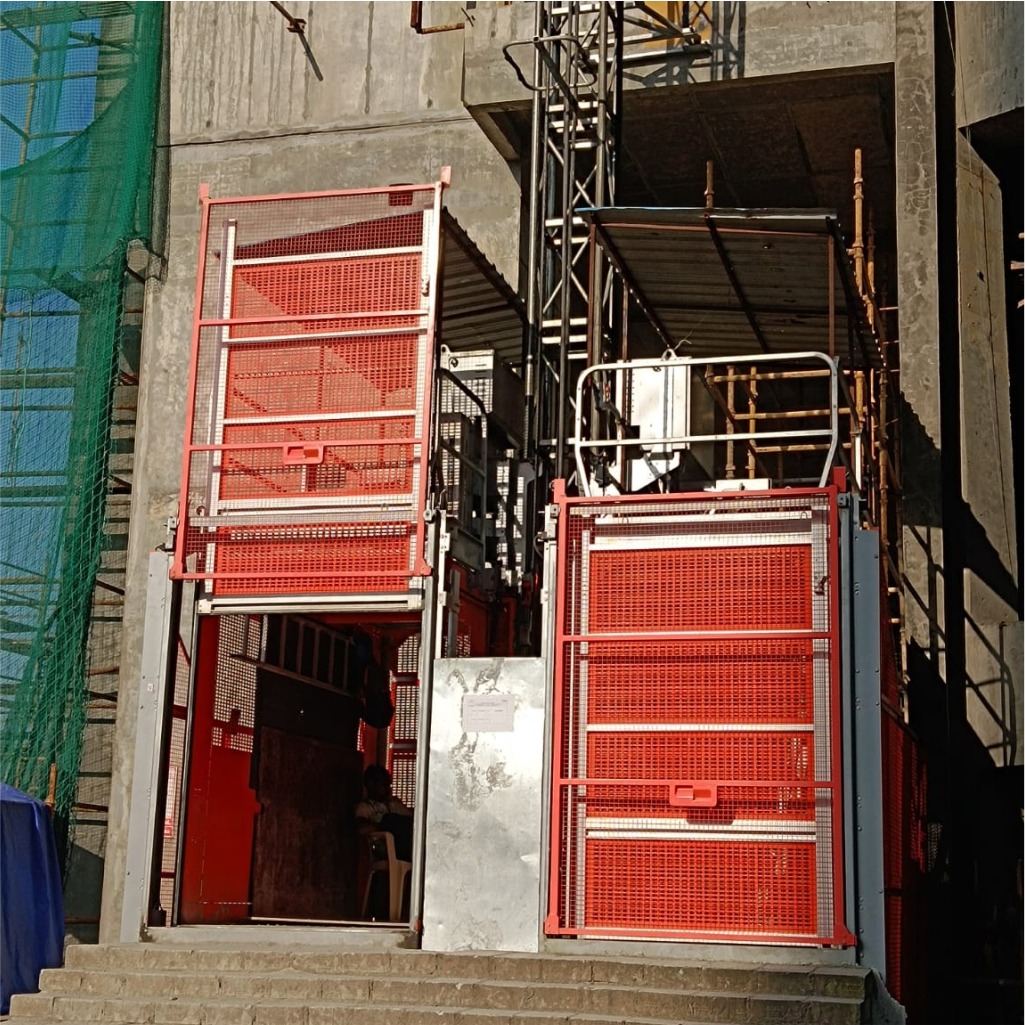
Vertikal’s expertise in tower cranes, hoists and vertical access systems ensures that contractors get reliable, project-ready equipment tailored to demands. Explore more:
https://vertikal.in/
Frequently Asked Questions (FAQs)
1. Can aluminium scaffolding replace a tower crane?
No. Scaffolding is meant for worker access and light tools, while tower cranes handle heavy lifting and high-rise material movement.
2. Which is more cost-effective for construction?
For large projects, tower cranes save time and reduce labour, making them more cost-efficient overall. For small sites or maintenance work, aluminium scaffolding is cheaper and quicker to use.
3. Does Vertikal provide scaffolding?
Vertikal focuses on tower cranes, hoists and lifting solutions, but comparing scaffolding helps contractors understand when a crane becomes the superior option. For scaffolding solutions, you can explore: https://aqaccess.com/