Luffing Jib vs Flat-Top Cranes: Which Works Better?
Choosing the right tower crane can make or break your construction schedule. Among the most popular options in high-rise and urban construction are luffing jib cranes and flat-top cranes. Both bring unique advantages, but your choice should depend on your site layout, project height, and operational requirements.
Understanding Luffing Jib Cranes
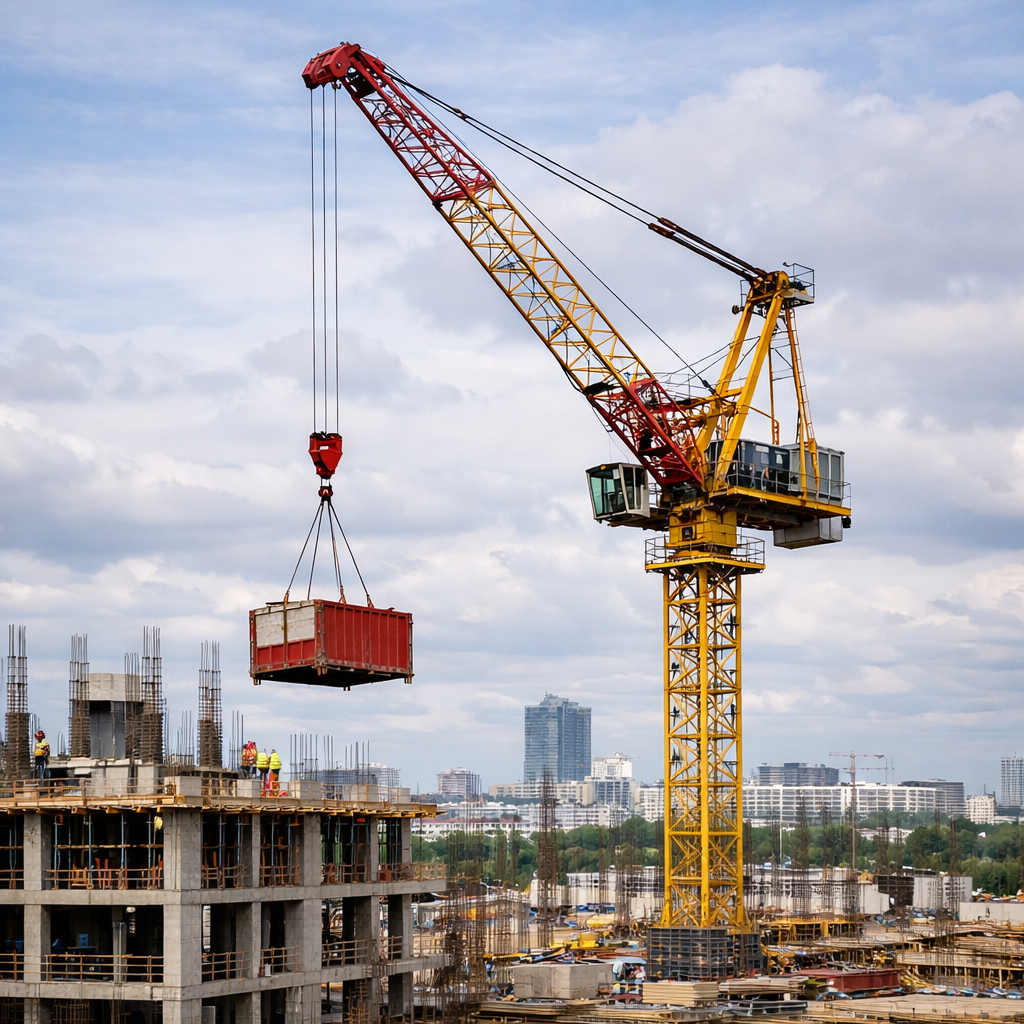
Luffing jib cranes are designed with a pivoting jib that moves vertically. This allows the crane to work in tight, congested sites where space is limited. One of their biggest advantages is the reduced swing radius, meaning the crane’s load can be maneuverer close to surrounding structures without compromising safety. Luffing jibs are ideal for city-center construction, multi-story complexes, and sites with narrow streets or restricted road access.
Key Benefits:
- Minimal impact on adjacent buildings
- High lifting capacity near the tower base
- Optimized for congested or irregularly shaped sites
Learn more about Vertikal’s luffing jib tower cranes and their city-ready solutions.
Understanding Flat-Top Cranes
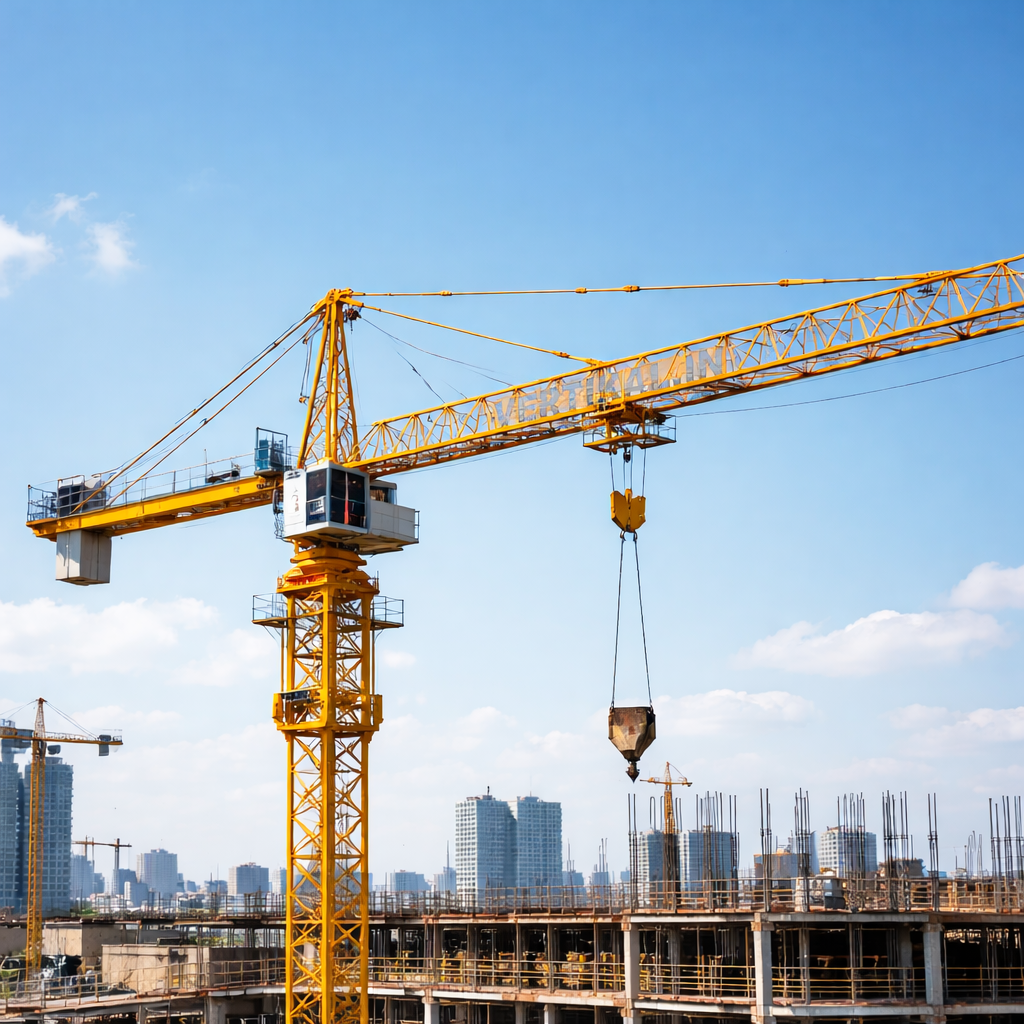
Flat-top cranes, or hammerhead cranes, feature a horizontal jib and a self-supporting top. They are a workhorse for large-scale, high-rise projects where space isn’t a major constraint. Flat-top cranes are generally faster to erect and dismantle, and their fixed horizontal jib provides predictable operational paths, making them perfect for large, linear construction sites.
Key Benefits:
- Efficient for tall, vertical projects
- Faster setup and teardown
- Predictable load movements for repetitive lifts
Explore Vertikal’s flat-top tower cranes for high-rise applications.
Luffing Jib vs Flat-Top: Site Considerations
- Urban vs Open Sites: If you’re in a tight city plot with limited maneuvering space, luffing jib cranes are unmatched. For expansive construction zones, flat-top cranes maximize lifting efficiency.
- Height vs Radius: Luffing jibs excel in high-rise construction with complex lifts near the tower. Flat-top cranes handle large horizontal loads efficiently over long radii.
- Project Timeline: Flat-top cranes are generally quicker to erect and dismantle, while luffing jibs may require more setup but offer superior manoeuvrability in congested areas.
Conclusion
Both crane types have their merits. For space-constrained urban projects, luffing jib cranes are the go-to choice. For large-scale, linear high-rise construction, flat-top cranes offer faster operations and straightforward load handling. Vertikal provides a range of cranes tailored for diverse projects, ensuring your choice aligns with site requirements, safety, and project efficiency.
FAQ
1. Can a luffing jib crane lift heavier loads than a flat-top crane?
Not necessarily. While luffing jib cranes provide excellent lift capability near the tower base, flat-top cranes excel in lifting predictable loads across long horizontal distances. The choice depends on your project’s radius and load distribution requirements.
2. How do I decide between luffing jib and flat-top cranes for urban construction?
Consider site constraints, surrounding buildings, and space availability. Luffing jibs are ideal for tight, congested sites with limited swing radius, while flat-top cranes suit open plots with long reach requirements.
3. Are Vertikal cranes customizable for specific site challenges?
Yes. Vertikal offers both luffing jib and flat-top cranes with modular options, tailored jibs, and height adjustments, ensuring each crane meets unique project needs safely and efficiently.